
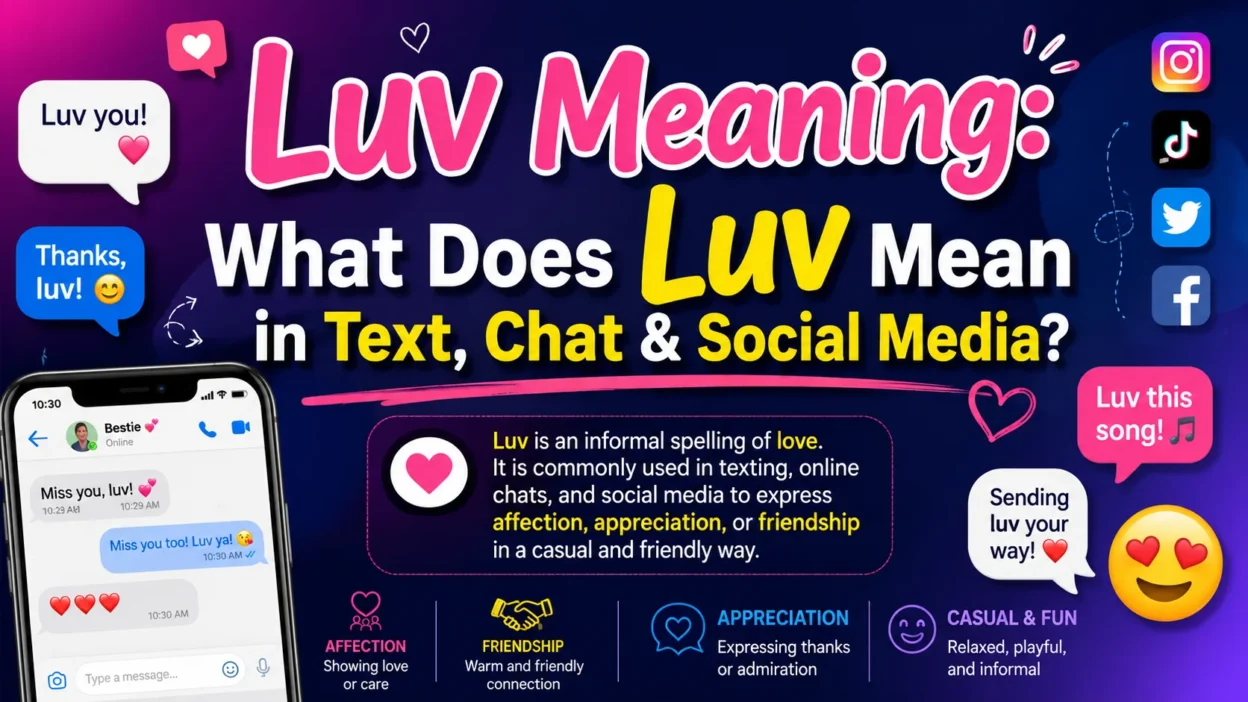
The word luv is a common informal spelling of love used in texting, social media, online chats, and casual conversations. Although it has the same basic meaning as love, luv often creates a more relaxed, friendly, playful, or affectionate tone.
People may use luv when talking to friends, family members, romantic partners, or even strangers in casual online interactions. Its exact meaning depends heavily on the context. For example, luv can express genuine affection in a romantic message, while someone might use luv casually when addressing a friend or customer.
Unlike love, luv is not generally considered standard formal English. It is mainly a conversational and stylistic spelling. You may see it in text messages, social media captions, comments, usernames, memes, and informal digital communication.
This guide explains the luv meaning, how people use it in texting, whether it is romantic, the difference between luv and love, common examples, and what luv can mean in different situations.
Quick Answer: What Does Luv Mean?
Luv means love in informal English.
People commonly use it as a casual spelling of love to express:
- Affection
- Friendship
- Care
- Warmth
- Appreciation
- Romantic feelings
- Playful friendliness
The meaning depends on the person using it and the context of the conversation.
What Does Luv Mean in Texting?
In texting, luv usually means love but sounds more casual and relaxed.
For example:
- Luv you!
- Thanks, luv.
- Luv this song.
- Sending luv your way.
- Goodnight, luv.
- Luv ya!
The spelling can make the message feel less formal than writing love.
For example:
I love this!
sounds neutral and natural.
I luv this!
can sound more playful, casual, or expressive.
Is Luv the Same as Love?
Basically, yes.
Luv is an informal spelling of love. It does not create a completely different emotion or definition.
The main difference is style and tone.
| Word | Meaning | Tone |
|---|---|---|
| Love | Affection, care, strong liking | Standard |
| Luv | Love | Informal, casual, playful |
| Luv ya | Love you | Very casual |
| My luv | My love | Affectionate |
So, if someone writes luv instead of love, they are usually changing the style, not the fundamental meaning.
Luv Meaning on Social Media
On social media, people frequently use luv in captions, comments, replies, and direct messages.
Examples include:
- Luv this photo!
- Sending luv ❤️
- Luv your outfit!
- Much luv!
- All the luv!
- Luv this vibe.
- Luv you guys!
On social platforms, luv can express anything from genuine affection to simple appreciation.
For example:
Luv your new profile picture!
does not necessarily mean romantic love. It may simply mean that the person really likes the picture.
Is Luv Romantic?
Sometimes, but not always.
The word luv can be romantic when someone uses it with a romantic partner or in an affectionate message.
Example:
Goodnight, luv ❤️
This may sound romantic.
However, luv can also be completely non-romantic.
Example:
Thanks, luv!
Depending on the speaker and context, this could simply be a friendly or affectionate way of addressing someone.
Therefore, you should not automatically assume that someone has romantic feelings just because they use luv.
What Does Luv Mean From a Girl?
If a girl uses luv in a message, the meaning depends on the context and your relationship.
She could use it to express:
- Friendship
- Affection
- Appreciation
- Playfulness
- Romantic interest
- Casual warmth
For example:
Luv your new haircut!
probably expresses appreciation.
Goodnight, luv ❤️
could be more affectionate or romantic.
The surrounding conversation matters more than the word itself.
What Does Luv Mean From a Guy?
A guy may also use luv in several ways.
For example:
Thanks, luv!
may simply be friendly.
Miss you, luv ❤️
is more likely to express romantic or intimate affection.
Again, the meaning depends on the relationship and context.
Luv Meaning in British English
Luv is particularly recognizable in British informal speech and writing.
It can be used as an affectionate form of address, especially in casual conversation.
For example:
You alright, luv?
Here, luv may simply mean something like dear or love and does not necessarily indicate romantic feelings.
This usage is especially associated with informal British speech.
Luv as a Term of Endearment
Luv can work as a term of endearment, meaning an affectionate way to address someone.
Similar expressions include:
- Love
- Dear
- Darling
- Hun
- Honey
- Sweetheart
- Babe
- Sweetie
For example:
Take care, luv.
This can sound warm and caring without necessarily being romantic.
Luv Meaning in a Relationship
Within romantic relationships, luv can be a cute and casual alternative to love.
Examples:
- Miss you, luv.
- Good morning, luv.
- Love you, luv.
- Sleep well, luv.
- Thinking of you, luv.
Couples may use the spelling because it feels more personal, playful, or relaxed.
Luv Meaning From a Friend
Friends can also use luv without any romantic meaning.
Example:
Thanks for helping me today, luv!
This could simply express gratitude and affection between friends.
Similarly:
Luv ya, bestie!
usually communicates friendship rather than romantic love.
Luv Meaning in Comments
When someone comments luv or luv this on a post, it usually means they really like or appreciate something.
Examples:
Luv this outfit!
Meaning:
I really like this outfit.
Luv the new design!
Meaning:
I really like the new design.
Sending luv ❤️
Meaning:
Sending affection, warmth, or positive feelings.
Luv vs Love
The biggest difference between luv and love is formality.
Love
Love is the standard English spelling.
Use it in:
- Formal writing
- Academic writing
- Professional communication
- Essays
- Articles
- Official messages
- Everyday standard English
Luv
Luv is an informal spelling.
Use it mainly in:
- Text messages
- Social media
- Casual chats
- Informal captions
- Online comments
- Friendly conversations
Example:
Standard: I love this movie.
Informal: I luv this movie.
Both communicate the same basic idea.
Luv vs Love You
These expressions can have slightly different tones.
I love you is direct and emotionally clear.
Luv you feels more casual, playful, or affectionate.
Luv ya is even more informal and conversational.
For example:
- I love you.
- Luv you!
- Luv ya!
- Love ya!
The last three are generally more relaxed than the first.
Luv vs Luv Ya
Luv ya is an informal way to write love you.
People often use it with:
- Friends
- Family
- Romantic partners
- Close acquaintances
Example:
Thanks for everything. Luv ya!
Depending on the context, this could be affectionate without necessarily being romantic.
Luv vs Love vs Like
These words can express different levels or types of positive feelings.
| Word | General Meaning |
|---|---|
| Like | Enjoy or appreciate something |
| Love | Feel strong affection or deep enjoyment |
| Luv | Informal spelling of love |
For example:
I like this song.
means you enjoy the song.
I love this song.
expresses stronger enthusiasm.
I luv this song.
has essentially the same meaning as love but uses a casual spelling.
Is Luv a Real Word?
Luv is recognized as an informal spelling of love, but it is not the standard spelling used in formal English.
You should generally use love in professional, academic, and formal writing.
Luv is more appropriate when you intentionally want a casual or conversational style.
Is Luv Formal or Informal?
Luv is informal.
Avoid using it in:
- Academic essays
- Business reports
- Professional emails
- Job applications
- Formal letters
- Legal documents
- Official communication
Use love instead when you need standard English.
Common Ways People Use Luv
Luv You
A casual version of love you.
Luv Ya
A very informal version of love you.
My Luv
An affectionate form of address.
Much Luv
A casual way to send affection or appreciation.
Sending Luv
A warm expression used in messages and social media.
Luv This
A casual way to say you really like something.
Luv Ya Lots
An especially affectionate informal expression.
Luv Meaning With Emojis
Emojis can influence the emotional tone of luv.
Luv ❤️
Usually affectionate and warm.
Luv 🥰
Often strongly affectionate or romantic.
Luv 😂
Can be playful or humorous.
Luv 😘
May suggest romantic or flirtatious affection.
Luv 🤗
Often expresses warmth, friendship, or emotional support.
Luv 💕
Usually affectionate and sweet.
The emoji does not change the basic meaning of luv, but it can provide clues about the sender’s intended tone.
Examples of Luv in Sentences
Here are natural examples of how people use luv:
- Luv your new dress!
- Good morning, luv.
- Thanks for everything, luv.
- Luv this song so much.
- Sending lots of luv your way.
- Take care, luv.
- Luv ya, bestie!
- Goodnight, luv ❤️
- Much luv to everyone.
- I absolutely luv this place.
- Luv your new profile picture.
- Miss you, luv.
- Luv this idea!
- Have a great day, luv.
- All my luv to you.
Is Luv Flirty?
Luv can be flirty, but it is not inherently flirtatious.
Context matters.
For example:
Luv your outfit 😘
may sound flirty.
But:
Luv this recipe!
is simply an expression of appreciation.
Similarly:
Thanks, luv!
could be friendly, affectionate, or culturally common depending on the speaker.
How Should You Respond to Luv?
Your response should match the tone of the original message.
If Someone Says Luv You
You can respond:
- Luv you too!
- Love you too!
- Aww, luv you!
- Same here ❤️
If Someone Says Thanks, Luv
You can respond casually:
- Anytime!
- You’re welcome!
- No worries!
- Of course!
If Someone Says Luv This
You can respond:
- Thank you!
- Glad you like it!
- Thanks so much!
- Me too!
Common Mistakes With Luv
Mistake 1: Using Luv in Formal Writing
Luv is informal and should generally not replace love in professional writing.
Mistake 2: Assuming Luv Always Means Romance
It can express friendship, appreciation, or casual affection.
Mistake 3: Assuming Luv Has a Different Basic Meaning
Luv is generally just an informal spelling of love.
Mistake 4: Ignoring Context
The same word can sound romantic in one conversation and completely friendly in another.
Mistake 5: Treating Luv as Standard Spelling
The standard English spelling is love.
Frequently Asked Questions
What does luv mean in texting?
Luv is an informal spelling of love. In texting, it can express affection, friendship, appreciation, or romantic feelings depending on the context.
Is luv the same as love?
Yes, luv generally has the same basic meaning as love. The main difference is that luv is informal and often creates a more casual or playful tone.
What does luv mean from a girl?
It depends on the context. A girl may use luv to express friendship, affection, appreciation, or romantic feelings. The word alone does not prove romantic interest.
What does luv mean from a guy?
A guy may use luv as a casual term of affection or as a romantic expression. The surrounding conversation and relationship provide more information about the intended meaning.
Is luv romantic?
It can be romantic, but it is not always romantic. Friends, family members, and even strangers may use luv as a casual term of affection.
Is luv a formal word?
No. Luv is an informal spelling. Use love in formal, professional, and academic writing.
What does luv ya mean?
Luv ya is a casual way of writing love you. It usually sounds more relaxed and playful than I love you.
What does much luv mean?
Much luv is an informal way to express affection, appreciation, or goodwill toward someone.
What does luv mean in British English?
In British informal speech, luv can be an affectionate form of address similar to love or dear. It does not necessarily indicate romantic feelings.
Can luv mean like?
Sometimes people use luv casually to show strong appreciation, such as luv this. In that context, it can mean really like or enjoy.
Conclusion
The luv meaning is essentially love, but the spelling creates a more informal, casual, and sometimes playful tone. People commonly use luv in text messages, social media comments, online chats, captions, and friendly conversations.
Luv can express romantic affection, friendship, appreciation, warmth, or simple enthusiasm. Its meaning depends heavily on context. A message such as goodnight, luv may feel romantic, while luv this photo usually expresses simple appreciation.
The spelling is particularly common in informal British English and digital communication. However, luv is not the preferred spelling for formal writing. In professional emails, academic work, and official documents, use the standard spelling love.
The simplest way to remember it is: luv = an informal way to write love. The emotion stays essentially the same, while the spelling makes the expression feel more relaxed and conversational.

Andrea is a finance writer and researcher specializing in celebrity Net worth, personal finance, and wealth-building strategies. With a keen eye for numbers and a passion for uncovering the financial stories behind the headlines, she provides in-depth analyses that inform and engage readers worldwide. When she’s not tracking fortunes, Andrea enjoys simplifying complex money topics to help others make smarter financial decisions.


